Home › Articles › Forex for Beginners
32 lessons
Forex for Beginners
For people about to start forex, or who have just started: what is worth knowing, in order. Each lesson takes about 5 to 10 minutes to read, and each one lists research or official sources. It does not tell you which currency to buy, when to enter, or where the market is going.
Reading from the top is best, but skip any lesson you already know. Look up unfamiliar words in the glossary.
Part 1First steps
What happens in forex: the size of the market, and how to read the trading screen and candlesticks (5 lessons)
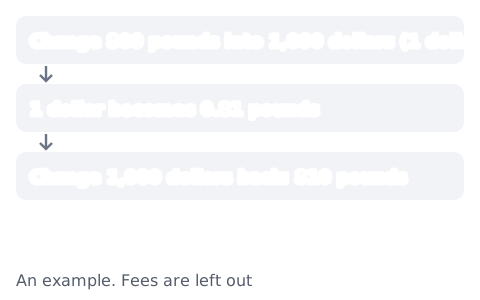
- Lesson 1What is forex? Reading a currency pair, and how buying and selling workForex as changing money, how a trade works, how to read a currency pair, why buying and selling give opposite results, and the two prices, in five diagrams.
VideoWatch on YouTube
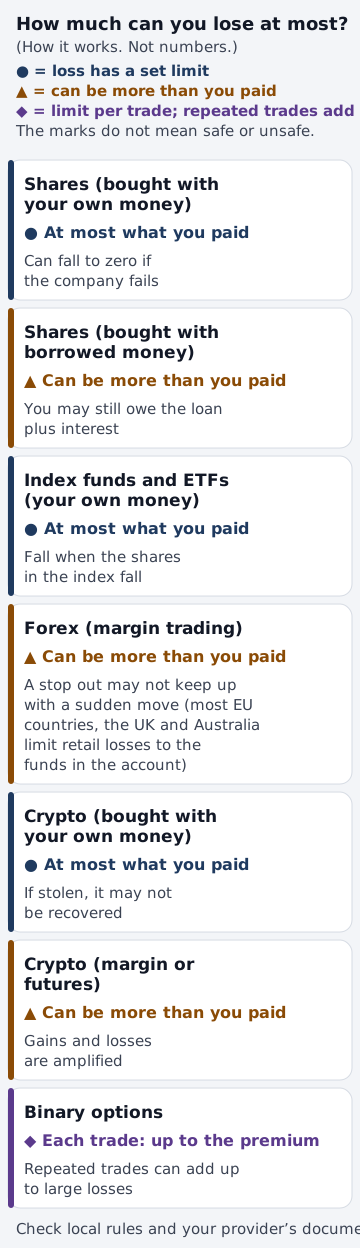
- Lesson 2Forex vs other investments: stocks, crypto, binary options and index investingForex, stocks, crypto, binary options and long-term index investing compared side by side: how they work, leverage, costs, maximum loss and rules.
VideoWatch on YouTube
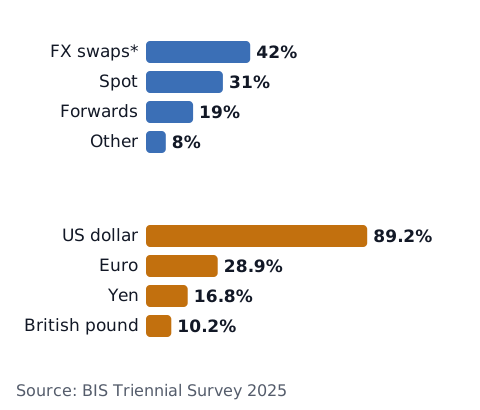
- Lesson 3How big is the forex market? About $9.6 trillion a dayForex trading reached $9.6 trillion a day, and the US dollar is in 89% of trades. The BIS survey, with a chart.
VideoWatch on YouTube
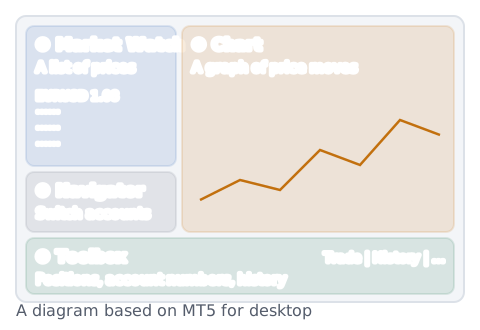
- Lesson 4How to read a trading app screen: what is where, using MT5 as the exampleThe four main areas of the screen, Bid and Ask, the order window, reading balance, equity and margin level, and the phone app's screens, using MT5, in five diagrams.
VideoWatch on YouTube
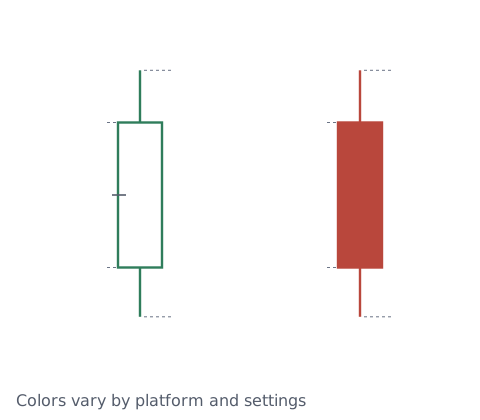
- Lesson 5How to read candlesticks, and do patterns work?The four prices one candle shows, plus engulfing, harami and doji. And what forex studies of these shapes found.
VideoWatch on YouTube
Part 2Protecting yourself
Before you open an account: how to check a broker, and watching out for social media pitches and unregistered firms (3 lessons)
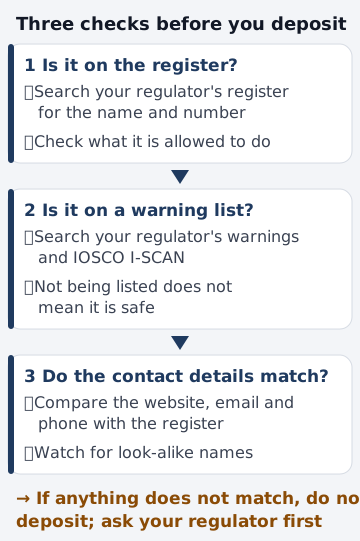
- Lesson 6How to check if a forex broker is regulated before you depositBefore you deposit, check three things: the register, the warning lists, and the contact details. Official links by country and region, and how to use I-SCAN.
VideoWatch on YouTube
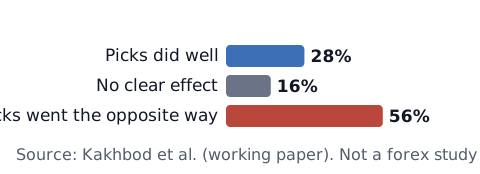
- Lesson 7Be careful with social media "pro traders"Some people recommending broker sign-ups are paid by the broker. How it works, plus what regulators and research say, with sources.
- Lesson 8Trading forex with a broker not registered where you liveProtections, complaint routes and rules can change. What regulators say, and how to check a firm.
Part 3Counting prices and profit
Lots, pips and the spread: counting profit and loss in numbers (3 lessons)
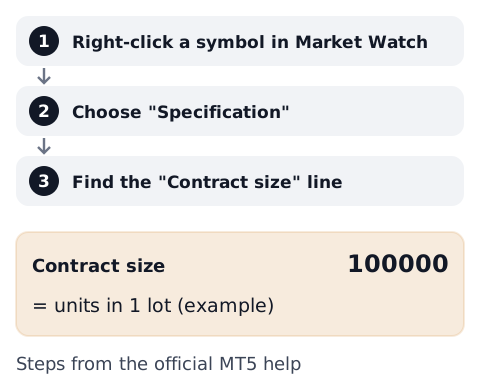
- Lesson 9What is a lot in forex? How many units one lot isHow many units one lot is depends on your broker and account. How to check it in MT5, and how lots, units and pip value connect, in two diagrams.
- Lesson 10How to calculate forex profit and lossP&L is "price difference × contract size × lots". Pips vs points, with a chart and worked examples.
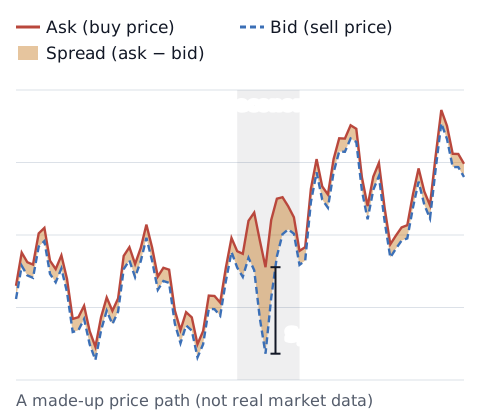
- Lesson 11What is the spread? Bid, ask, and when it widensThe spread is the gap between the bid (sell price) and the ask (buy price). How it relates to the chart, and when it widens.
Part 4Margin and leverage
Margin, leverage and stop-outs: how losses affect the money you deposited (7 lessons)
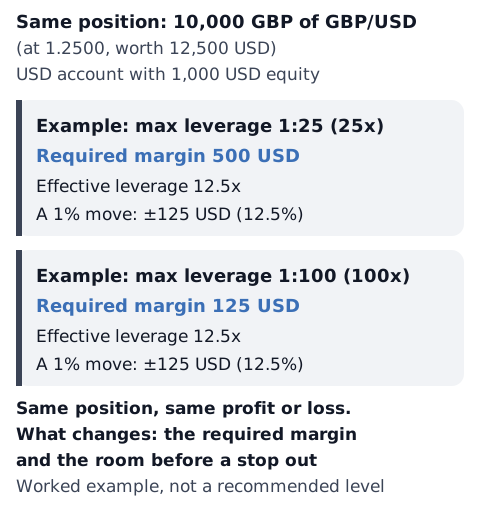
- Lesson 12What is leverage in forex? How many times your margin your trade isThe margin formula, maximum vs effective leverage, and how much of your equity a 1% move is, with three worked examples and two diagrams.
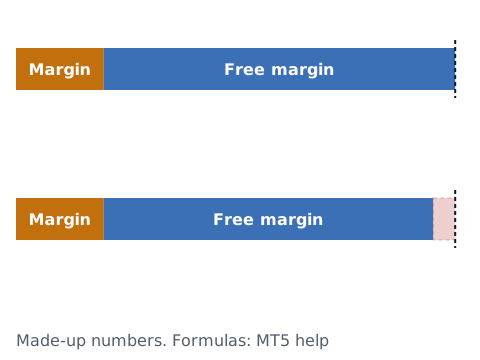
- Lesson 13Margin, equity, free margin and margin level explainedWhat the five numbers on your trade tab mean, and which ones move when a trade goes against you, with a chart.
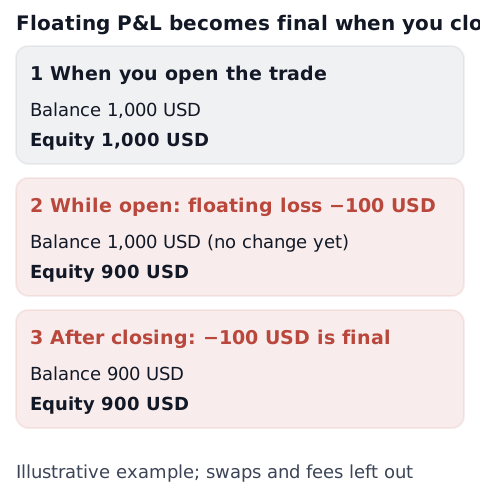
- Lesson 14Unrealized profit and loss: the result of trades you have not closedFloating profit and loss is not final until you close. Where MT4/MT5 show it, how it moves equity and margin level, and two worked examples, in two diagrams.
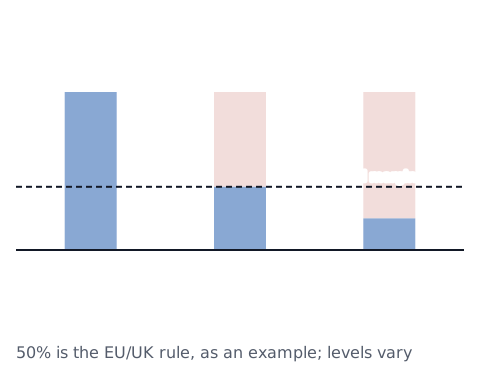
- Lesson 15What is a stop out? Forced closing, and losses larger than your depositHow margin level falls as losses grow, how rules differ by region, when price jumps past the level, and how negative balances are handled, in three diagrams.
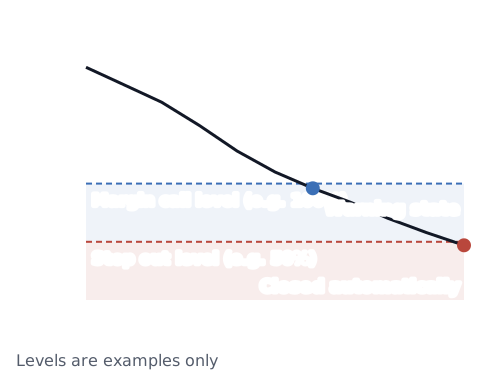
- Lesson 16Margin call vs stop out: a warning, then automatic closingA margin call is a warning; a stop out is automatic closing. The two levels, the order they come in, and how rules differ, in two diagrams.
- Lesson 17Forex leverage limits by country and regionMaximum leverage for retail accounts, checked against official regulator sources.
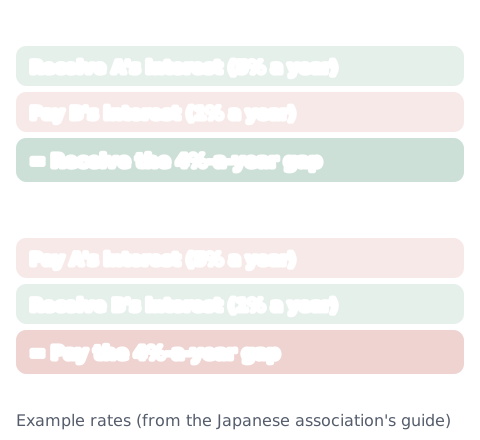
- Lesson 18What is swap (rollover)? Receiving or paying the interest rate gapHow the interest rate gap is received or paid, why buying and selling are reversed, how the amount changes and can turn into a payment, and looking at it with price moves, in four diagrams.
Part 5Orders
How orders work, when prices can slip or gap, and market holidays (6 lessons)
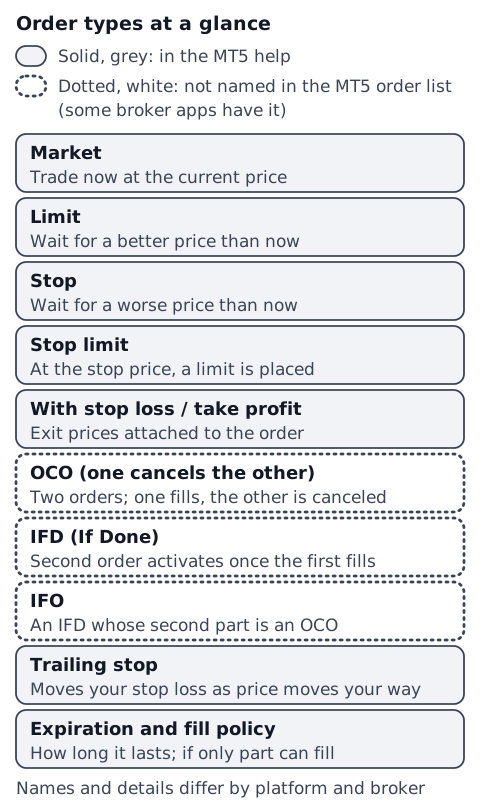
- Lesson 19Forex order types: from market orders to OCO and If DoneFrom market, limit and stop orders to OCO, If Done and trailing stops. All the order types on one chart.
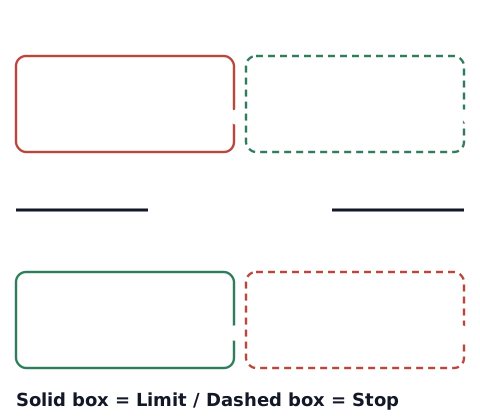
- Lesson 20Limit vs stop ordersA limit waits for a better price; a stop waits for a worse one. Where the four pending orders go, with a chart.
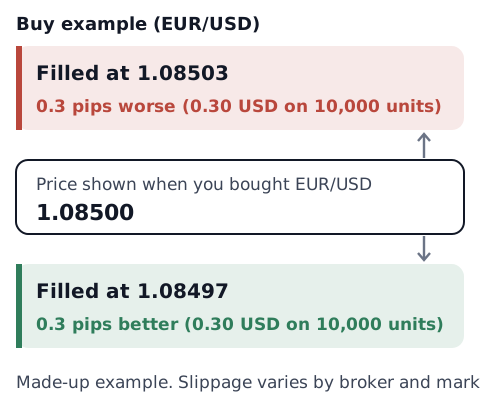
- Lesson 21What is slippage? The gap between your order price and your fillSlippage is the difference between the price you ordered at and the price you got. It can go either way. With charts on order types.
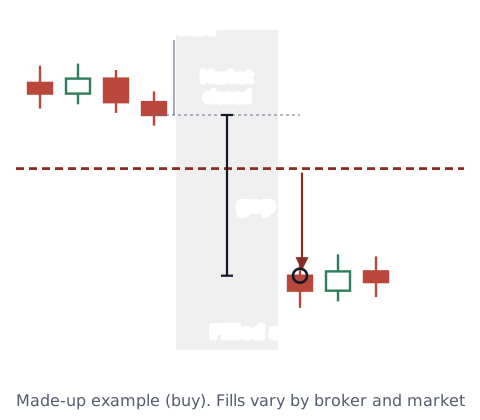
- Lesson 22Price gaps: why a stop-loss may not fill at your priceIf price jumps while the market is closed, your stop can fill at a worse price than you set. With a chart.
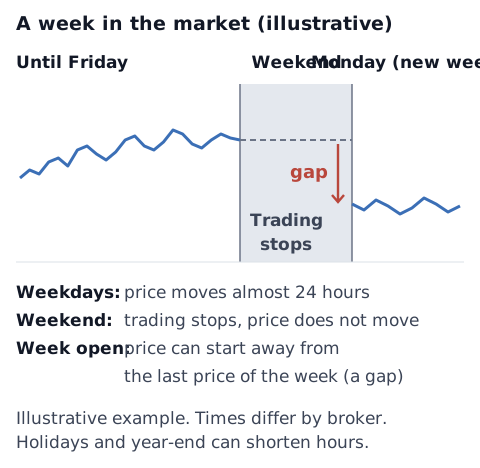
- Lesson 23Forex market holidays, year-end and holding over the weekendAlmost 24 hours on weekdays, closed at the weekend. What can happen over weekends, holidays and year-end, and how to check your trading hours.
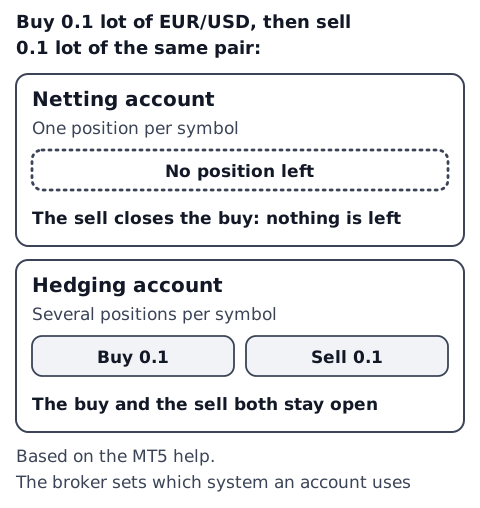
- Lesson 24What is hedging in forex? Netting vs hedging accountsHedging is holding a buy and a sell on the same pair at once. How account types differ, and why price moves cancel but costs remain.
Part 6Decide your loss before you enter
Setting how much you can lose, in numbers, before you enter (4 lessons)
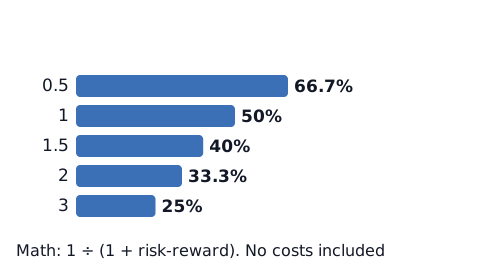
- Lesson 25Risk-reward ratio and break-even win rateNeither win rate nor risk-reward alone decides your result. The math of looking at both together, with a chart.
- Lesson 26Count your trading costs for a monthAdd up a month of spread, commission and swap, and compare it with your balance. How to count, with an example.
- Lesson 27How to set a daily loss limit for your own accountDecide your daily loss limit in money from three starting points, then check it with numbers.
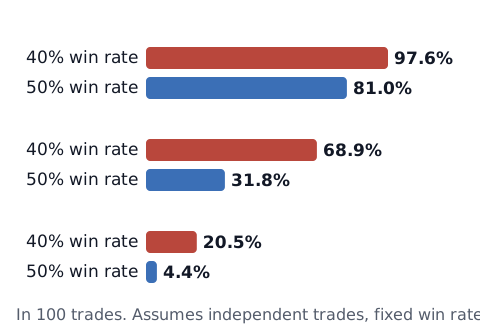
- Lesson 28Losing streaks, in numbersAt a 50% win rate, 5+ losses in a row at least once within 100 trades has about an 81% chance of happening. Treat streaks as something that will happen.
Part 7Keeping records and reviewing
Keeping records, and when feelings move your decisions (4 lessons)
- Lesson 29What to write in a trading journalNot just profit and loss: feelings, rules and trade count in one table. A one-line format and a weekly review.
- Lesson 30How to review a month of tradingOnce a month, write down five numbers and choose just one thing to change next month.
- Lesson 31How to stop revenge tradingFive rules to set in advance, for the moment you want to win it back right away.
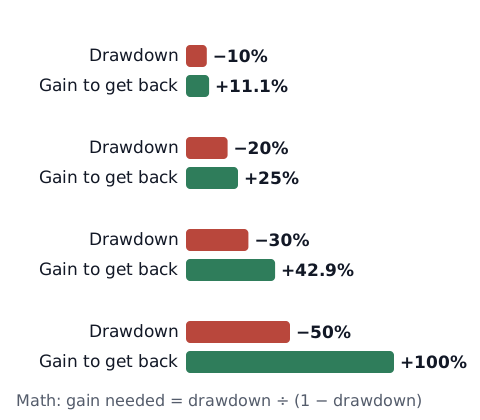
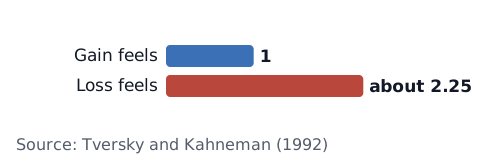
- Lesson 32Loss aversion in tradingLosing 100 often feels worse than winning 100 feels good. What research says, and how it relates to taking profits early. With sources.
Free calculators for this course
This article is general information. It is not investment advice or a recommendation to make any trade.
Updated 22 Oct 2026 · Run by Kenji Okumura, Representative, Tiltnote · About this site